
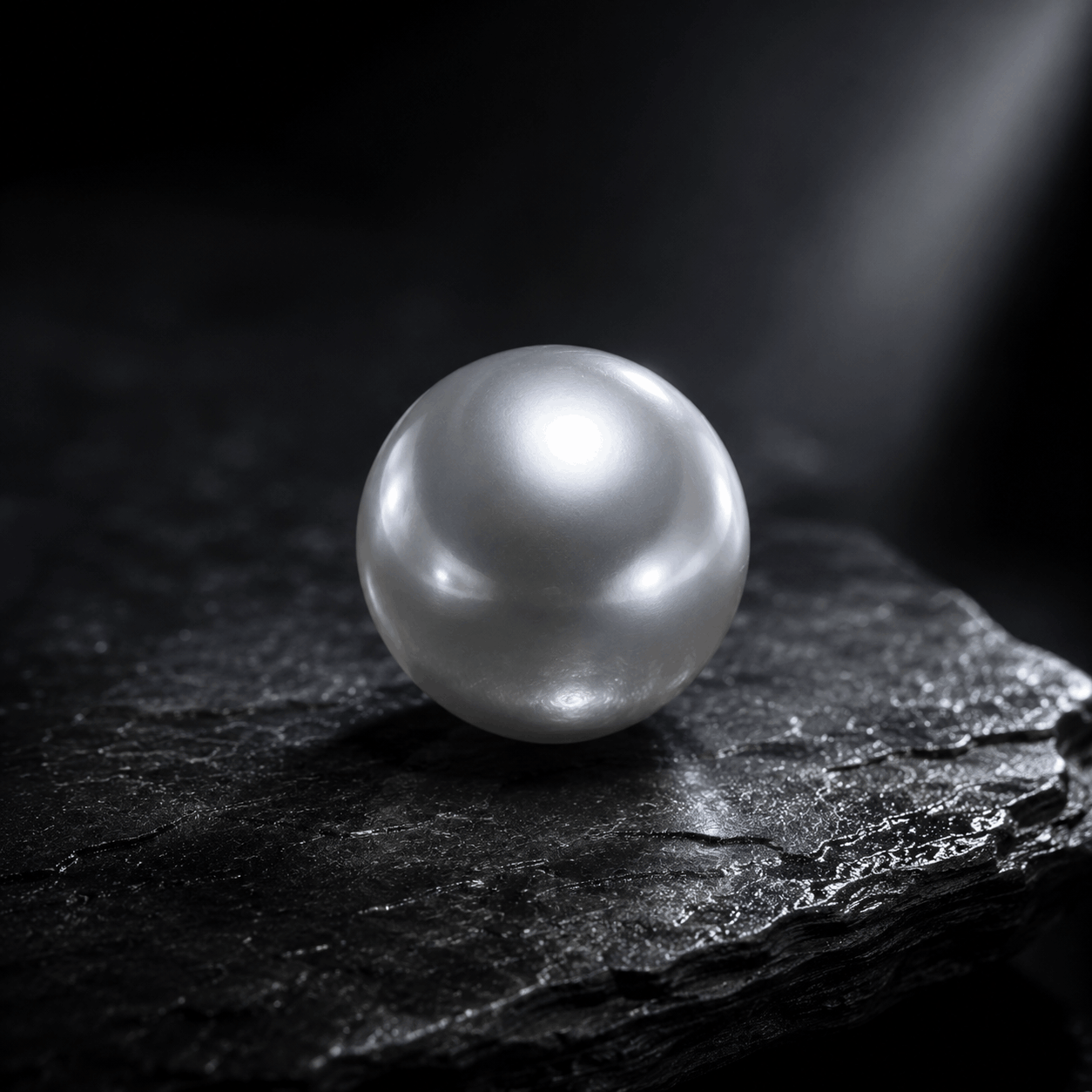
Most people know white pearls. But fewer know the difference between a white pearl and a silver South Sea pearl. And honestly, once you see a genuine silver South Sea pearl under natural light — that cool luminous glow, that extraordinary size — white pearls start to look like a different category entirely. So here’s everything worth knowing before you buy one.
What Are Silver South Sea Pearls
Silver South Sea pearls are cultured in the silver-lipped Pinctada maxima oyster — the largest pearl-producing oyster in the world. They’re farmed primarily in the waters off northwestern Australia. And the silver-lipped variety produces pearls with a naturally cool silvery white body color. No dye. No treatment. So the silver tone comes directly from the inner lip of the oyster’s shell — and that color transfers directly into the nacre the oyster produces.

That’s a key distinction. Silver South Sea pearls aren’t simply white pearls in a large size. Instead they’re a specific product of a specific oyster in specific waters. And that explains everything about what makes them rare, what makes them expensive and what genuinely makes them worth the investment.
Size — Why It Matters So Much
Size is what separates silver South Sea pearls from every other white pearl type. So the typical range runs from 9mm to 20mm — with most quality strands sitting between 10mm and 15mm. Compare that to Japanese Akoya pearls which top out around 9mm. Or freshwater pearls which rarely exceed 12mm in genuine round form. Even at the smaller end, then, South Sea pearls are significantly larger than most alternatives.

At 12mm to 14mm the nacre is thick too — often 2mm to 6mm of solid layered nacre coating the nucleus. And that thickness produces the characteristic deep satiny luster. Not mirror-sharp like Akoya. Satiny. Dimensional. Like light moving through the pearl rather than bouncing off it. Plus thick nacre ages beautifully — it deepens rather than dulls over decades of wear.
Silver South Sea Pearl Jewelry — What’s Available
Silver South Sea pearl jewelry spans the full range of fine jewelry categories. But the significant size and price point means each piece carries more weight and intentionality than equivalent pieces in smaller pearl types. So it’s worth understanding the main formats before buying.

A silver South Sea pearl necklace is the centerpiece of the category. A matched strand of 12mm to 14mm pearls graduating from clasp to center is one of the most impressive achievements in pearl jewelry. Silver South Sea pearl earrings in stud or drop format make strong standalone pieces too — South Sea presence without the full strand investment. And a single pendant — one large round silver South Sea pearl on a fine gold chain — is genuinely one of the most elegant fine jewelry pieces available at any price point. One pearl. One chain. Nothing else needed.
Silver vs Golden — Two Very Different Pearls
Golden and silver South Sea pearls come from the same oyster species — the Pinctada maxima — but from different varieties. Silver pearls come from the silver-lipped variety. Golden pearls, on the other hand, come from the gold-lipped variety farmed primarily in the Philippines and Indonesia. And the color difference is completely natural — entirely determined by the oyster, not by any treatment after harvest.

Silver South Sea pearls run from bright white through silver and cream — cool toned, classic and extraordinarily elegant. Golden South Sea pearls, however, run from pale champagne through to deep canary yellow — warm, rich and genuinely rare at the deeper color levels. Both are exceptional. But they suit very different aesthetics and metal choices. Silver pearls pair naturally with white gold and platinum — the cool tones reinforce each other beautifully. Golden pearls are almost always paired with yellow gold — the tonal warmth is one of the most cohesive combinations in fine jewelry. So the choice between the two is fundamentally about which color story fits the buyer’s personal style.
Overtones — Where the Real Character Lives
Body color is only part of the story. The overtone — that secondary iridescent color sitting over the base — is what gives each pearl its distinctive character. And it’s what separates exceptional pieces from merely good ones.

Pure silver overtone is the most classic and most prized — a cool metallic luminosity over the white base that reads as almost otherworldly under natural light. Rose overtone, on the other hand, adds a warm pinkish glow and works beautifully in yellow gold settings where the warm metal softens the cool pearl. Cream overtone runs slightly warmer than pure silver and suits pink or reddish skin undertones particularly well. And blue overtone — rarer and particularly striking — adds a cool steely quality that reads as very contemporary in modern settings. So overtone selection is worth paying specific attention to before buying. Because two pearls of identical size and grade can read very differently depending on their overtone — and in finished jewelry that difference is immediately visible.
Quality Grades — What They Mean Here
Understanding grading before buying isn’t optional. It’s essential. Luster first. Always. Top-grade luster is satiny and deep — light seems to move inside the pearl rather than reflecting off the surface. It should almost show your reflection. But lower grades look flat by comparison and lack that dimensional quality that makes the finest pieces genuinely memorable.
Surface quality runs from AAA — near-flawless with minimal imperfections — through AA and A grades with increasingly visible surface characteristics. For silver South Sea pearl jewelry at this investment level, AAA is the standard worth targeting. AA, however, offers genuine beauty at better value — and the difference doesn’t always justify the premium depending on the format. Shape matters too. Perfectly round silver South Sea pearls are rare and command a significant premium. But near-round, oval and drop shapes in high luster grades are often exceptional pieces — and more accessible in price without sacrificing luster quality.
How to Buy Silver South Sea Pearl Jewelry
A few things are non-negotiable at this level. First — always verify origin as Australian or legitimate South Sea Pinctada maxima production. Because the farming location and oyster species directly affect nacre quality. Second — luster and surface grade should be explicitly documented. Not just “AAA quality” as a marketing phrase. Third — ask about nacre thickness. Thin nacre on a South Sea pearl is rare but it exists at the lower end of the market. And fourth — always check the return policy. Minimum 30 days is standard. Anything less is a red flag.

At PearlsOnly every South Sea pearl piece comes with full grading documentation backed by a 90-day return guarantee. So you can assess the piece properly in real lighting before fully committing. Browse the full South Sea collection and find the piece that genuinely justifies the investment. Because the right silver South Sea pearl only gets more beautiful with time.
Caring for Your Pearls
Silver South Sea pearls are the most robust cultured pearl type — that thick nacre provides genuine durability. But basic care still matters enormously at this price point. So put pieces on last when getting ready and take them off first. Perfume, hairspray and cosmetics dull nacre over time. And the larger surface area of South Sea pearls makes that dulling more visible when it occurs.

After wearing, wipe gently with a soft damp cloth. Then store separately from harder jewelry — diamonds and sapphires scratch nacre even at South Sea thickness levels. A lined box or soft pouch is all that’s needed. And get strands restrung every few years if worn regularly. Because silk thread weakens quietly over time — and a broken strand of silver South Sea pearls is an entirely avoidable situation. Basic maintenance. Decades of beauty. That’s the whole story.
